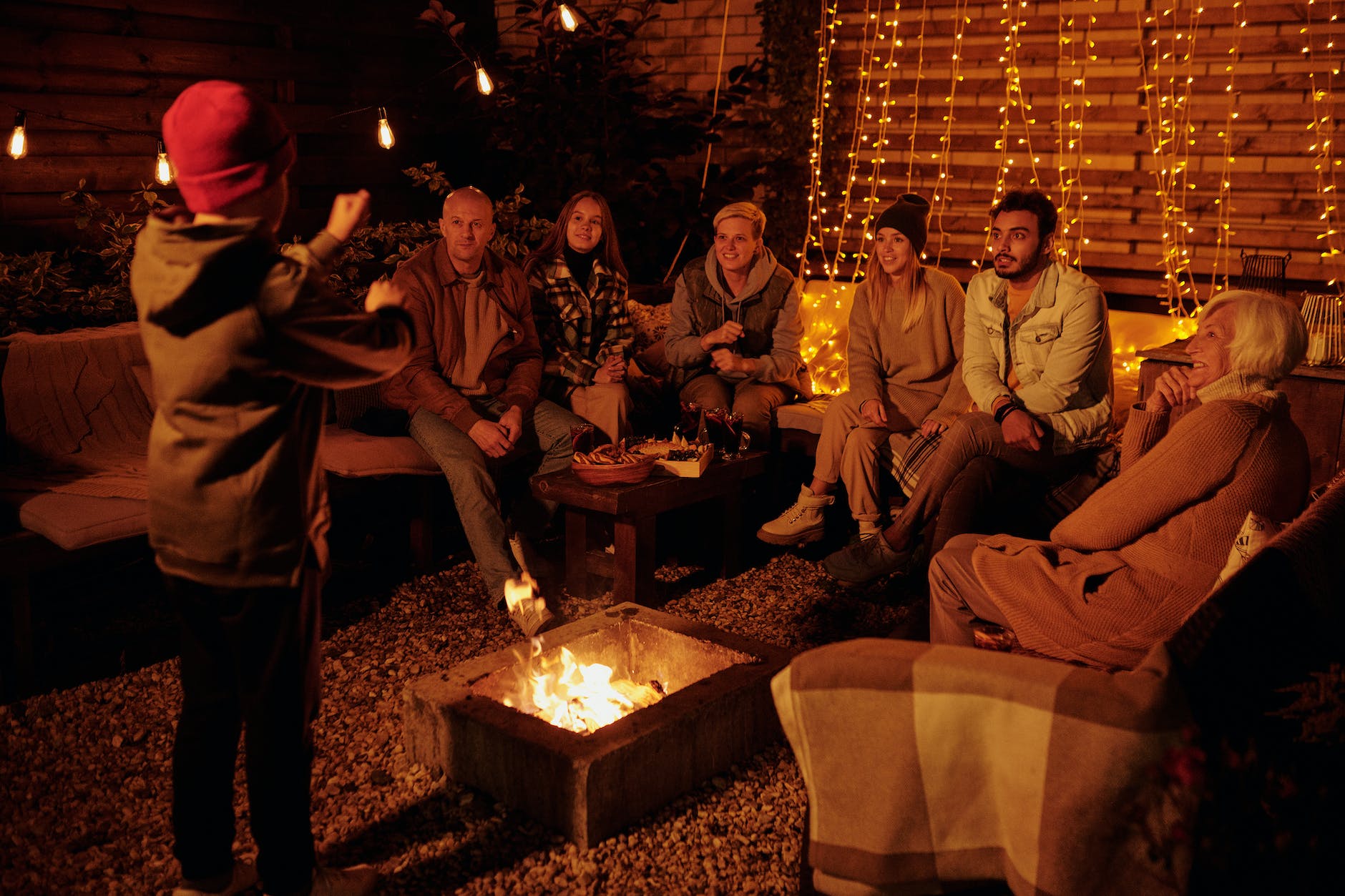
Parties where conversation is the only entertainment are cozy, but may also get boring fast. You as a host need to have some ready ideas on how to alternate the energy levels in your get together so it doesn’t lead to a yawning epidemic. Getting together is fun and catching up with friends is a great part of it. However there needs to be multiple layers in your entertaining repertoire if you, as well as your guests are to have a memorable time.
We host people, because we want to open our homes, thoughts and entertainment to sharing with others. It is in shared experiences that we connect as social beings. Even the most introverted of us like being in the company of a select few because socializing is essential to human nature. We love to recount anecdotes or talk about our plans, while sipping on our favorite beverage and nibbling on party munchies. However, at some point it is also nice to have some more active kind of fun – this is why party games can add another dimension to a conversation and food only fare.
There are really fun games that you can buy these days. However, this article is about no or basic props games that can be played in a group of 4+. You don’t need any props beforehand except maybe pen and paper. You would have played all or most of them so you can skip reading the rules, but just in case you need refreshing on the method or rules, here is a pick of top 5 fun no prop games.
1. Dumb Charade– The eternal crowd favourite. Start with guessing movies, then go to books or songs if the group seems like a pro.
Rules are simple – one person whispers a movie name to the clue solver who will act the name out using only signs, without any verbal cues. The rest of the audience has to guess the name of the movie based on those clues. For larger group divide into two teams with a member of opposing team whispering the movie name to the clue solver in the other team. The rest of the other team then tries to guess the movie name. If they can’t solve correctly within the stipulated time, a point is rewarded to the opposing team.
It slowly turns from being a tame, proper rules fsollowed game to one where each team competes in getting more creative in coming up with movie names, it takes a few rounds to nudge the silent ones, but in a couple of turns, they are the ones more likely to come up with the whackiest names. Dumb Charades is a game that has no age bar, even kids love to participate as do grown-ups. It never fails to bring up the energy level of the party.
The group can set out some ground rules like thumbs up for English, thumbs down for regional, a name tag sign when acting out a proper name, denoting a circle to represent the globe and hence lead to the place where the movie is set in.
2. Mafia – An exciting role playing game based on power of deduction, perfect to be played in a larger gathering of 7+ people. In fact, the more, the merrier is true for this one. Apparently devised as a research project, this game rose to popularity in 1990’s. Chances are you might have played this game at least once with maybe another name like assassin, werewolves, village, or in a board game format of Mafia or its derivative Resistance. The principle is same – it is game of survival in which either the good guys win by eliminating the mafia completely, or the mafia wins by becoming equal in number to the villagers.
Rules – There should be 3 good guys or civilian for every bad guy or mafia, one oracle and one moderator. The nomenclature changes based on the version you are playing; while oracle can be known as sheriff or detective, the mafia can be called werewolves. The civilians similarly can be known as villagers or sheep. However, all versions need a moderator. The moderator doesn’t play the game but conducts the different phases of games and has to make sure that rules are followed. You can shuffle a deck of cards to let people pick on the roles, or write the roles on pieces of paper and let them be drawn from a bag. Everyone reads their cards and knows their role but are not allowed to reveal it. The moderator conducts the games and announces the different phases.
Game phases:
- Night – Moderator declares night and everyone has to close their eyes. He then says “Mafia is waking up”. The mafia open their eyes to acknowledge each other and point through gestures only to the victim they decide to eliminate. The moderator then asks mafia to close their eyes by declaring “Mafia is sleeping”. When moderator says “Detective (Sherriff or Oracle) is waking up”, the detective opens her eyes and points to a member she suspects to be mafiosi. The moderator signals to let her know if her choice was correct. Then the moderator asks everyone to close their eyes. He taps the detective’s choice (if they were identified correctly) to indicate they have been eliminated – they can’t influence the discussion thereafter. Usually the night time is accompanied with drumming of knees or tables by everyone so sounds of shuffling are masked.
- Day – the moderator asks everyone to open their eyes together by saying “The village is waking up”. The players left after eliminations then open their eyes and discuss who they believe to be the mafia. The mafia join in to throw them off the track by accusing a villager of being a mafia. What follows is a fun exercise in power of deduction by an uninformed majority to identify the informed minority. The day time lasts longer and concludes with a vote on who the members believe to be a mafiosi. The moderator declares the result and the voted out member reveals his identity.
- The game repeats in phases from night to day, day t night, with maximum one person eliminated in each phase.
- Game Conclusion – If all mafia are eliminated by being voted out or identified by oracle the villagers win the game. Else if the Mafia have eliminated or succeeded in voting out enough villagers such that the remaining villager and mafia are equal in number; then the mafia win the game.
Caveat – there are various versions to this game involving additional roles like Doctor, Don, or variations like not revealing the identity of the voted out among others. The version above is a tried and tested one which stays time bound. You can of course choose the one which makes it more exciting for your set of players.
3. Antakshari – every bathroom singer’s India’s Got Talent moment. Antakshari is a singalong with the rule of singing a song that beings with the last letter or consonant of the previous one. It can be played like a relay singalong with every player taking turns in a group. However, if it is a large gathering, the fun is to turn it competitive by dividing into two teams. The teams have to come up with a song within 1 minute of the previous team ending theirs else they forfeit a point. The game goes on till a team reaches a pre agreed points tally, say 10 or till as long as you want to.
Bonus: A trivia take on this is the game of ATLAS, where teams or individuals have to come up with a name of place starting with the last letter of the previous place mentioned. A game that involves kids engagingly and has been known to pass many a long car rides without tantrums.
4. Pictionary – At test is not the talent of drawing but of getting your message across with the clock ticking. Yet many an artists have been discovered in this game but even more thanked their stars they didn’t take up arts as career choice. One can either make use the Pictionary board game or make it even more fun by going rogue the dumb charade way. Again, it can be played in a relay format or in teams. One person writes a clue and hands it to the clue solver. The clue solver has to draw out the clues to help the rest of the audience to guess the word. Rules and conclusion similar to dumb charade or antakshari. Props needed are pencil and paper, but if it’s a larger group it would be nice to have an easel/board so everyone can see the drawing easily.
5. Lateral puzzles – if you want a more cerebral sort of fun then getting your group to solve lateral puzzles can be a very rewarding exercise in powers of discussion. Coined by the physici an/psychologist Edward de Bono in 1967, these puzzles don’t follow the logical deductive reasoning pattern and have to involve creative thinking to solve them. You will have to look up on some lateral puzzles online beforehand though. These puzzles usually involve a small story told by the moderator and the audience has to guess what happened by asking questions that can only be answered using a Yes/No/Maybe – A classic one to start the session:
– A woman climbs up, climbs down, takes off her clothes, climbs up again, shrieks. What happened?
The session can go on till the group solves the puzzle or gives up and begs the moderator to take them out of their agony. The answer is the woman climbed up the weighing scale, in case you couldn’t really stop thinking about it.
These are few of the no/low prop games that you can play that can quickly transition a quiet get together into an actively engaged one. Even if people are averse to some game ideas in the beginnings, the energy slowly rubs off and everyone joins in enthusiastically. Your job as host is to see which game to play and not let a bit of fun go out of hand by turning akin to super competitive contact sports. Use your judgements to give leeway to the introverts and get the extroverts to slightly back off from taking over the arena.
Just because we have grown up, doesn’t mean we forget how much fun playing games is.
#hostingeasy #gettogether #partygames
 Hosting Easy